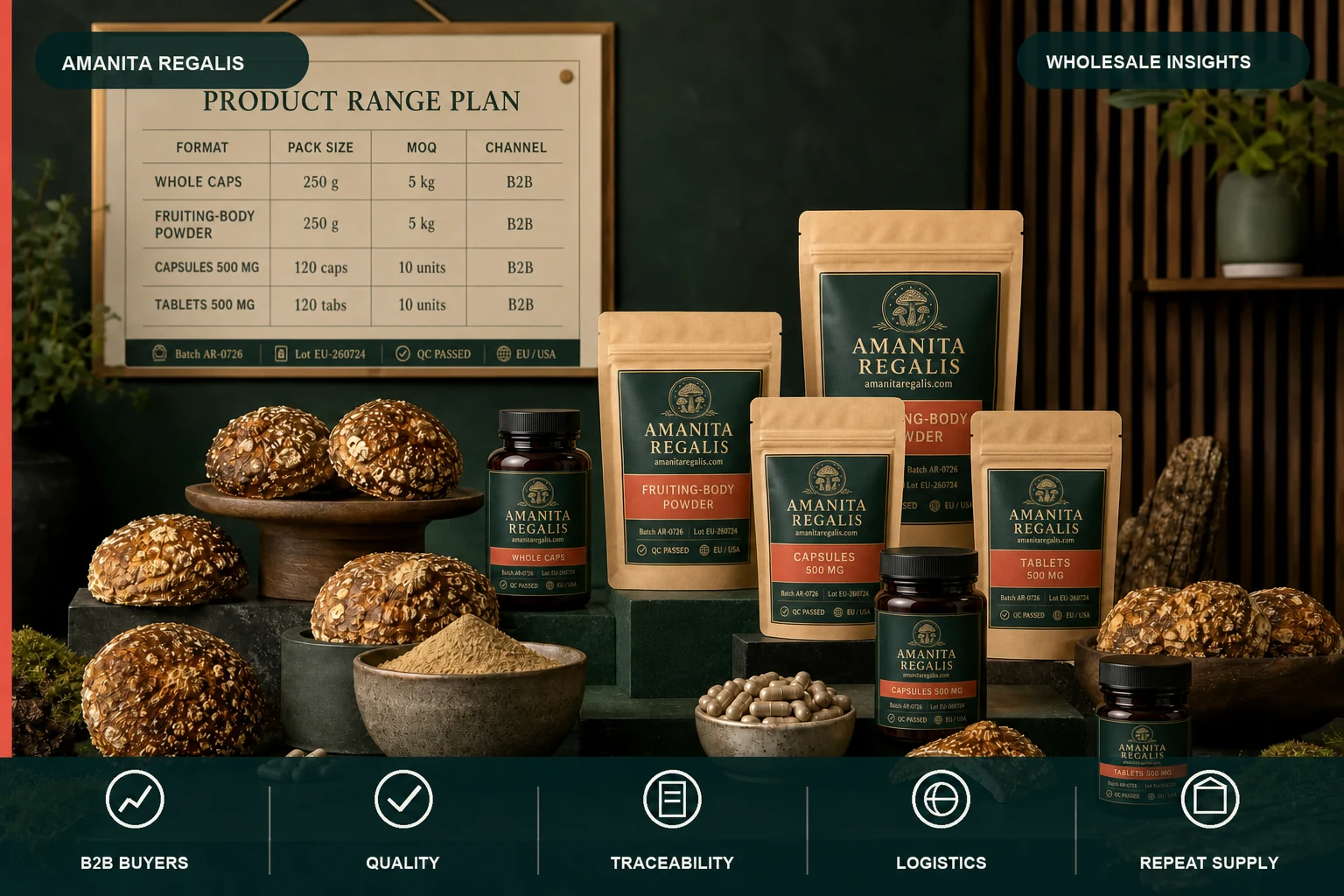
A strong specialist range does not need to launch every possible format at once. It should serve a defined customer group, communicate clear differences and remain manageable for purchasing and warehouse teams.
A phased range makes commercial learning less expensive.
Choose one anchor format
Start with the format that best matches the primary customer. Whole caps may anchor a visually led specialist offer, while powder may fit manufacturing customers better.
The anchor product should receive the clearest specification, content and inventory forecast.
Add grades only when customers understand them
Multiple grades can create useful price and presentation tiers, but only when the differences are explained consistently.
If staff and customers cannot describe the distinction, additional grades may add confusion rather than value.
Expand into finished formats carefully
Capsules or tablets can create a different commercial proposition and may introduce new packaging, labelling and minimum-order requirements.
Treat each finished format as a separate launch project with its own approval and demand model.
Build internal links around buyer decisions
Product pages, FAQs and blog guides should help buyers move from a broad question to a specific format and quotation request.
Useful content explains specifications and procurement steps without making medical claims or presenting regulatory assumptions as universal facts.
Review the range with real data
Track enquiries, sample requests, conversion, repeat orders and inventory age by format. These signals reveal which products deserve expansion.
Remove or postpone weak formats instead of allowing the range to become operationally expensive.